Thank you for attending The Power of Play! Safe Shores’ 30th Anniversary Event! We hope you enjoyed your activity booklet. Below, you will find the answers to the puzzles inside.
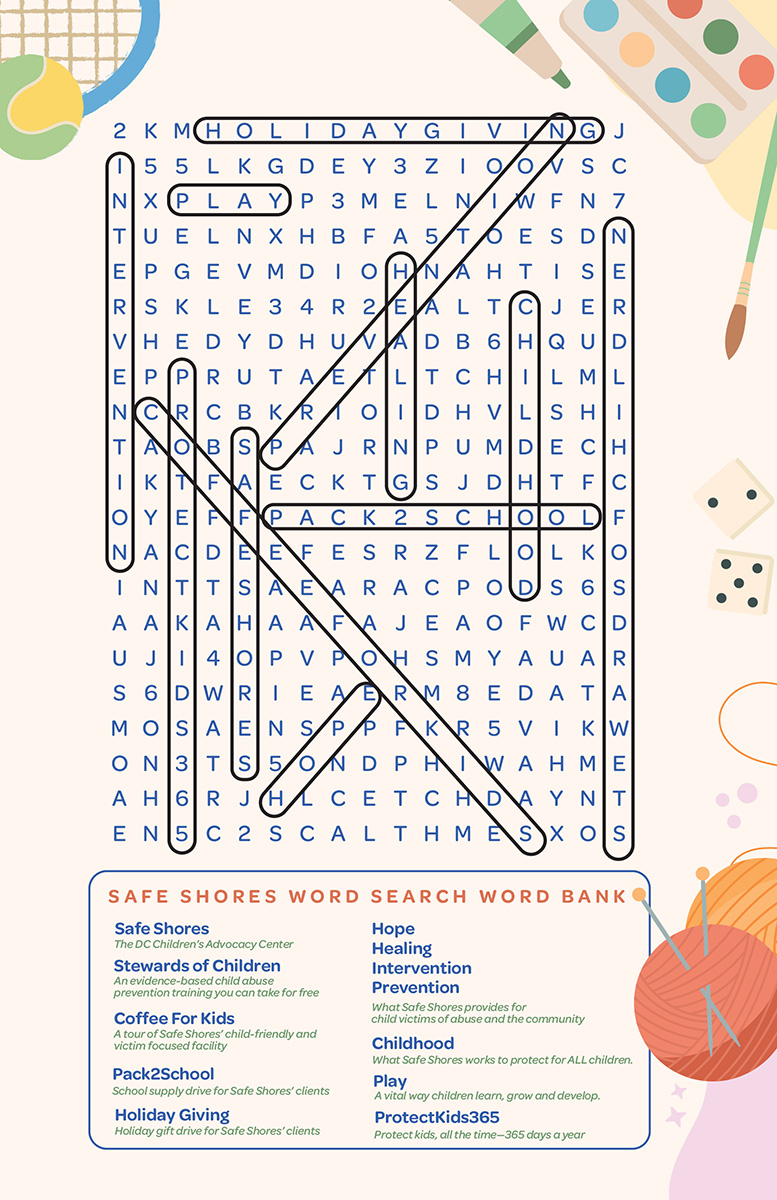
Safe Shores – The DC Children’s Advocacy Center Word Search
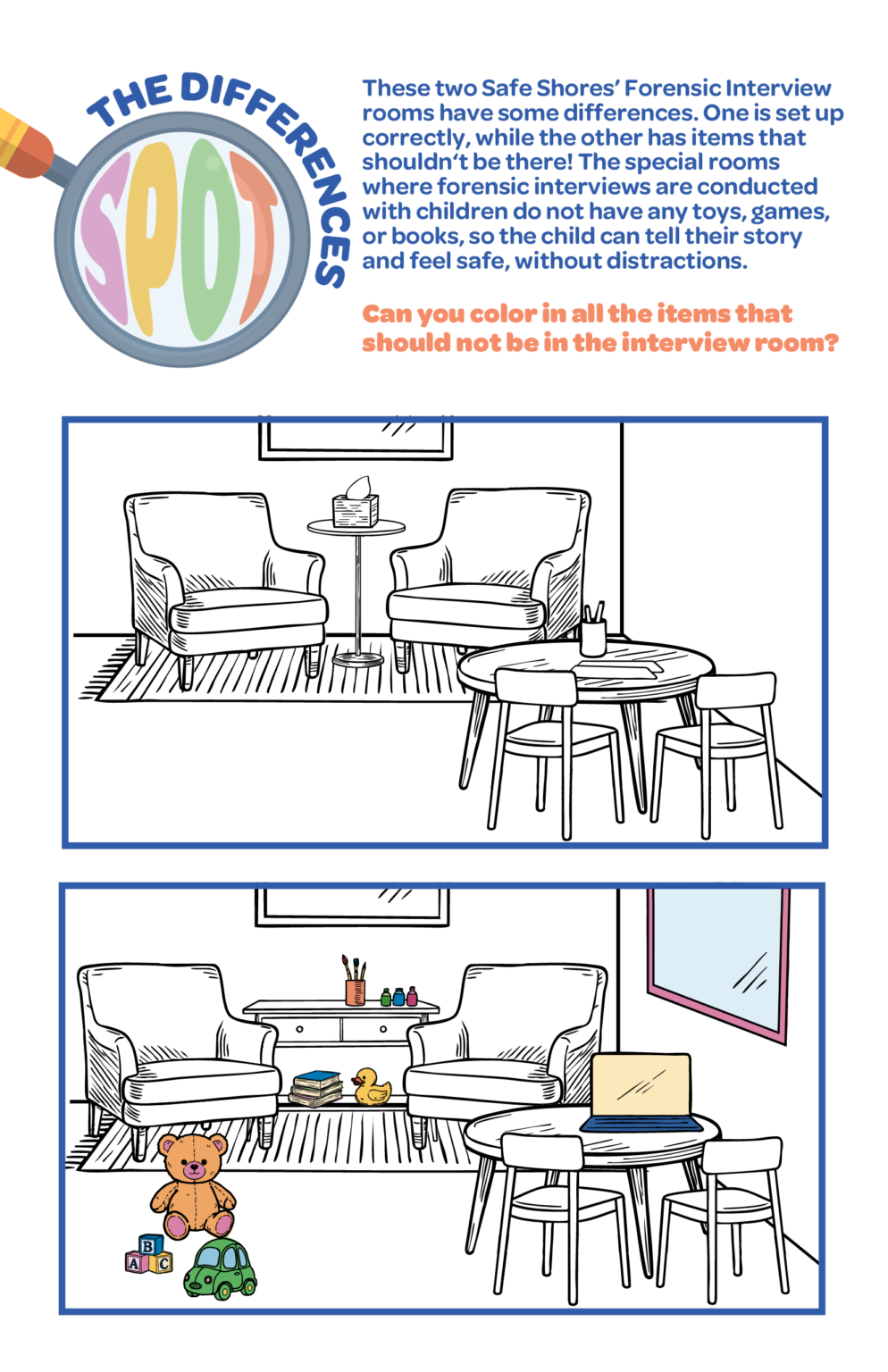
Spot the Differences: What items should not be in the Forensic Interview Rooms?
The Forensic Interview room is designed to be a private, confidential space where children can share very sensitive information. It’s important that children understand their privacy is respected and protected throughout the process.
There are intentionally no toys within the room. During a forensic interview, children are asked to talk about things that are true and that really happened to them. At the beginning of the interview, specially trained Forensic Interviewers will explain that to the child. Because of that, items — like toys — that might encourage imaginative play or storytelling, are not found in these special rooms. The goal is to create an environment that supports children in focusing on their own experiences and sharing information as accurately as possible.
Interviewers will also tell the child about the team who will be listening to their conversation in a different room, and point out the recording equipment. However, the rooms are intentionally designed so the child does not see all of the team members who represent the agencies who investigate child abuse cases. These team members sit in a specialized observation room, and watch the interview on the recording equipment.
The following items should not be found in a Forensic Interview room:
- Duck
- Car
- Blocks
- Teddy Bear
- Books
- Laptop
- Painting supplies
- Observation Window
Attend a Coffee for Kids tour to see these specialized rooms up close and hear directly from our staff.
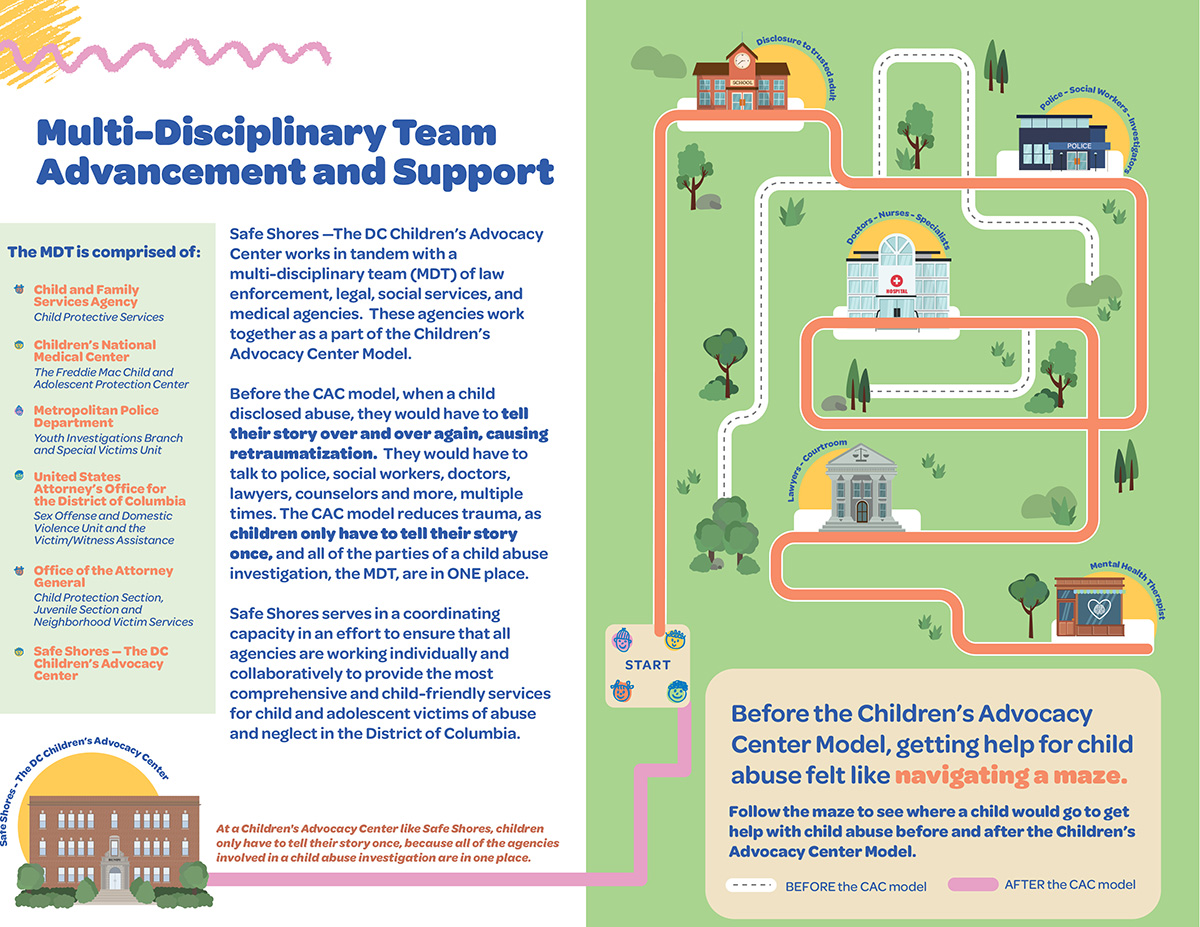
Before and After the Child Advocacy Center Model Maze
Before the Children’s Advocacy Center Model was implemented, when a child disclosed abuse, they would have to tell their story over and over again, causing retraumatization. They would have to talk to police, social workers, doctors, lawyers, counselors and more, multiple times. The maze for “Before the CAC Model” has no true end, because there are many times when the child would have to go back to speak with police, doctors, lawyers, and more multiple times.
The CAC model reduces trauma, as children only have to tell their story once, and all of the parties of a child abuse investigation, the MDT, are in ONE place. Thus, the maze for after the CAC model goes just to Safe Shores – The DC Children’s Advocacy Center.
Pinwheel Search and Find
Did you find all the pinwheels, plus the bonus items?

Healing is Not Linear Dot to Dot
Healing is never a straight line, which is why Safe Shores offers clinical therapy services to child victims of abuse for as long as they need, at no cost.
Your support, no matter what size, helps us to continue to provide trauma responsive care at no cost to child victims of abuse and their families, for as long as they need.