While Safe Shores serves as the sole Children’s Advocacy Center (CAC) for the nation’s capital, there are nearly 1,000 organizations implementing the CAC model throughout all 50 states. The crux of the Children’s Advocacy Center Model is a multi-disciplinary team response to allegations of child abuse, bringing together professionals to provide coordinated, evidence-based, trauma-responsive care to child victims of abuse and their families.
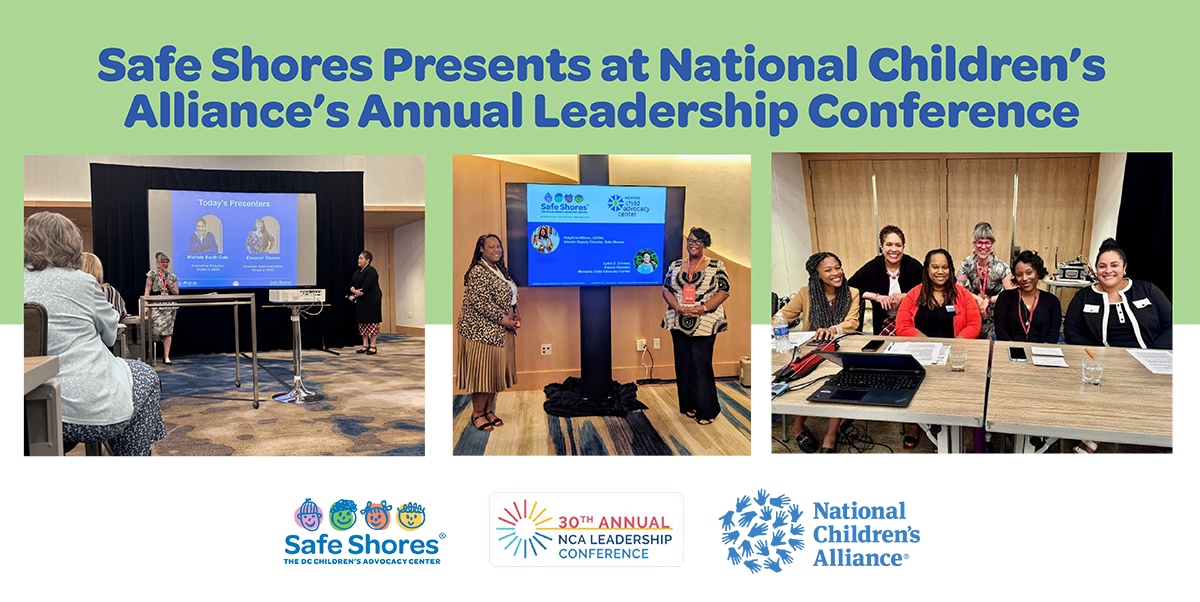
National Children’s Alliance (NCA) is the national accrediting body for Children’s Advocacy Centers (CACs) across the country, providing support, advocacy, quality assurance, and national leadership to help support the vital work of CACs. Every year, the National Children’s Alliance brings together leadership in the Children’s Advocacy Center field for its NCA Leadership Conference. This year marked a milestone: NCA’s 30th Leadership Conference, and Safe Shores was honored to host four breakout sessions for conference attendees.

This session explored how CACs can institutionalize workforce development and embed leadership practices into their organizational culture. Safe Shores – The DC Children’s Advocacy Center served as a case study example, sharing how it has cultivated a resilient, mission-driven team over nearly two decades by prioritizing what it calls a culture of care without compromise.
At its core, a culture of care is an intentional organizational commitment to the people who make the mission possible. It goes beyond offering wellness perks or occasional recognition; it is about embedding values of compassion, accountability, and mutual respect into the very systems that govern a CAC’s daily work.
Presented by Safe Shores’ Executive Leadership Team — Eleanor Gease and Michele Booth Cole—this session used real-world scenarios to illustrate how to develop guiding philosophies, promote board and budget alignment, and make strategic leadership decisions that sustain a culture of care. Participants left with practical tools for embedding these principles into their own CACs, recognizing that when staff are supported and invested in, children and families ultimately receive the highest level of care.
By linking leadership practice with organizational structures and culture, attendees left with both a toolkit and a real-world example of how to strengthen workforce resilience and build the future of the child abuse response field.
Presenters:
Michele Booth Cole, J.D. | Executive Director
Eleanor Gease, PHR | Director of Administration

This session highlighted the journey Safe Shores – The DC Children’s Advocacy Center has taken to bridge the gap between two seemingly opposing worlds: the demand for numeric outcome data and the principles of trauma-informed, human-centered care. Presenters told the story of how staff may wrestle with discomfort, disagreement, and uncertainty while searching for a balanced approach towards developing tracking mechanisms for charting well-being, resilience, and safety in ways that felt more authentic to trauma-informed practice.
The facilitators provided a blended framework utilized by Safe Shores that allows the organization to report the numeric outcomes necessary for accountability while also honoring that small and incremental changes may still represent significant therapeutic progress.
This workshop was about presenting a new evaluation tool; it was about telling the story of an organization learning to reframe clinical outcome evaluation as a practice that can be both accountable and empowering. It was about the courage to sit in tension, the persistence required to move through discomfort, and the vision to design a system of measurement that truly reflects the journey of healing.
Presenters:
Meng Wang, MA | Program Evaluation Specialist
Cara Morro, LICSW, LCSW-C | Clinical Services Director

Effective leadership in Child Advocacy Centers (CACs) requires more than operational skill—it demands the ability to foster collaboration, support diverse needs, anticipate change, and sustain the mission in challenging times. This session, the first in a two-part series, provided new and emerging CAC leaders with actionable strategies to strengthen workforce resilience, enhance team cohesion, and lead with intentionality.
Facilitated by Safe Shores’ Executive Leadership Team — Eleanor Gease and Michele Booth Cole — and drawing on panelists’ experiences, participants explored how to identify their own leadership strengths and gaps, build partnerships that amplify impact, and create a culture that supports staff retention and well-being.
Safe Shores – The DC Children’s Advocacy Center served as a case example, sharing how it has cultivated a resilient, mission-driven team over nearly two decades by prioritizing what it calls a culture of care without compromise.
The session featured interviews with current staff members who each began their tenure at Safe Shores in entry-level roles and now lead core program areas. Their stories illuminated how intentional investment, meaningful professional development, and a culture rooted in care and accountability can cultivate leadership from within.
Presenters:
Michele Booth Cole, J.D. | Executive Director
Eleanor Gease, PHR | Director of Administration
Panelists:
Rachel Booker | Forensic Services Program Director
Micah Goudy | Manager of Communications and Marketing
Shardé McConnell, LPC | Client Advocacy Services Program Director
Kalphria Wilson, LICSW, LCSW-C, LCSW | Interim Deputy Director

Safe Shores – The DC Children’s Advocacy Center (CAC), along with nearly 1,000 other CACs across the country, responds to child abuse as part of a Multi-Disciplinary Team (MDT) of experts. Together, the MDT investigates alleged abuse, conducts forensic interviews, provides client advocacy, reduces trauma, and identifies resources so that children and families may begin the healing process. Multi-Disciplinary Team professionals often face overwhelming caseloads, systemic barriers, and high stress. This session, co-facilitated by Safe Shores’ Interim Deputy Director, Kalphria Wilson, and the Memphis Child Advocacy Center’s Deputy Director, Lydia Crivens, offered evidence-based strategies and practical tools to reduce burnout, strengthen collaboration, and embed sustainable resilience into daily workflows and team culture.
Providing real-world examples from MDT scenarios, the session highlighted common barriers to buy-in and demonstrated approaches that increase engagement and sustainability. Through group reflection and resilience planning activities, participants left with actionable strategies to strengthen both individual and team capacity in high-stress environments.
Presenters:
Kalphria Wilson, LICSW, LCSW-C, LCSW | Interim Deputy Director, Safe Shores – The DC Children’s Advocacy Center
Lydia Crivens | Deputy Director, Memphis Child Advocacy Center